
With the rapid popularization of intelligent devices, Benutzer’ demands for human-computer interaction are shifting from “usable” Zu “easy to use.” Jedoch, traditional touch screens have exposed many limitations in special application scenarios: touch malfunctions in oily kitchen environments, blind operation in vehicles leading to safety hazards, and screen content being difficult to read under strong outdoor light. These pain points have created an urgent need for new interactive components, and the knob screen, as an innovative solution integrating physical control and digital display, is becoming a focus of industry attention.
ICH. How Knob Screen Technology Breaks the Traditional Interaction Dilemma
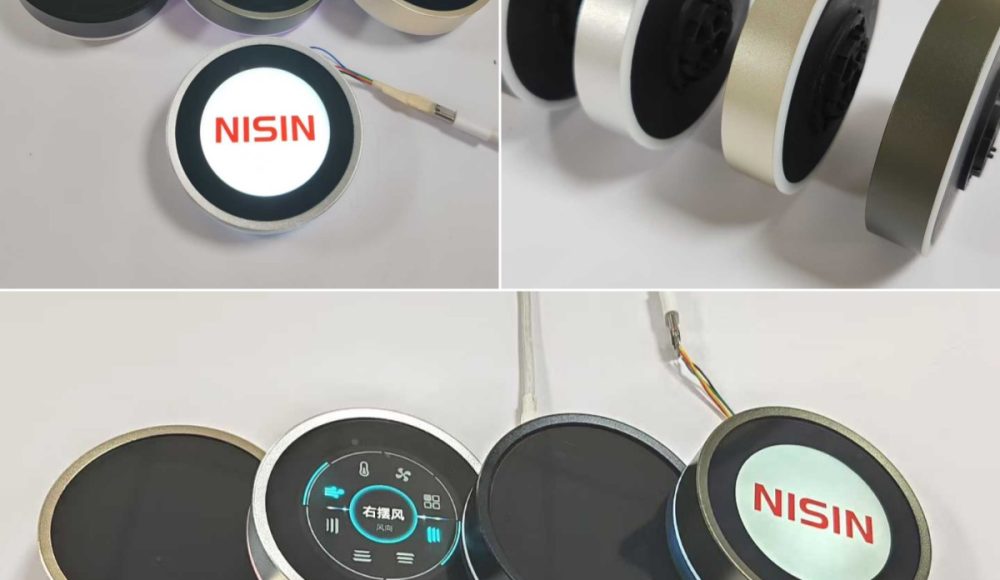
The knob screen is an integrated interactive module that combines physical knob control with high-definition display functions. Compared to pure touch screen solutions, its main advantage lies in providing tactile feedback through mechanical structures, allowing users to adjust parameters without looking at the screen. This design has significant value for the following scenarios:
1. The need to prevent accidental operation in the kitchen appliance field
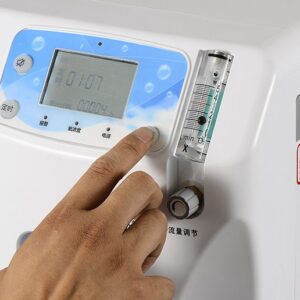
Traditional kitchen appliance touch panels are prone to accidental touches or malfunctions when oil or water stains are present. The rotary screen features an IP65 waterproof structure combined with an oil-resistant coating, maintaining stable responsiveness even in humid environments. Physical rotation adjustment, coupled with a raised dot positioning design, keeps single-handed operation error within one level, significantly improving operational accuracy.
2. Safety Requirements in In-Vehicle Scenarios: Frequent head-down operation of the central control screen while driving increases traffic risks. The rotary screen with uniform damping design supports blind operation, allowing drivers to adjust volume, Temperatur, and other functions without taking their eyes off the road. This interaction method improves operational stability to 99.5%, effectively reducing safety hazards caused by accidental touches.
3. Adaptability to Extreme Environments: Industrieausrüstung, outdoor charging stations, and other scenarios place stringent demands on the environmental tolerance of display modules. The rotary screen solution supports operation in a temperature range of -35℃ to 70℃, coupled with an adjustable brightness range of 200-3000 cd/m², ensuring clear readability even under direct sunlight or in low-temperature environments.
II. Shenzhen Rixin Optoelectronics’ Technical Implementation Path
As a technology company specializing in LCD display modules, Shenzhen Rixin Optoelectronics has built a complete service chain from design and prototyping to mass production since its establishment in 2010. Its rotary screen product line covers eight specifications ranging from 1.28 inches to 2.76 Zoll, meeting the integration needs of different devices through modular design.
Wichtige technische Merkmale
Rixin Optoelektronik’ rotary screen solution presents breakthroughs in three dimensions:
High-Definition Visual Display System: Utilizing IPS or AMOLED panels with a resolution of 480×480 pixels, it can simultaneously display multi-dimensional information such as device operating status and parameter values. This design provides users with instant visual feedback during rotation and adjustment, enhancing the intuitiveness of the interaction.
Dual-Mode Interaction Architecture: The product simultaneously supports three operation methods: rotation adjustment, press confirmation, and touch selection. The physical knob solves the need for blind operation, while the touch function retains the flexibility of intelligent operation. The combination of both addresses the efficiency requirements of different usage scenarios.
Drahtlose Konnektivität: Integrating Bluetooth 5.0 and Wi-Fi 2.4G modules, it supports direct control via mobile app, remote data reporting, and OTA firmware upgrades. This design provides an expansion interface for smart home and connected vehicle applications.
Application Practice Verification: In the tea bar machine project of Anhui Electric Spark Technology Co., Ltd., the rotary screen solution provided by Rixin Optoelectronics achieved accurate switching between 5-11 water temperature levels, with a temperature control accuracy of ±1℃. Elderly and child users can select the temperature simply by rotating the knob, eliminating the need for complex menu operations and significantly improving product usability.
In the advanced smart faucet project of Dreame Technology, the solution successfully withstood 4KV contact static electricity and 8KV air static electricity tests, resolving the risk of electrostatic failure in metal body environments and achieving zero functional failure delivery. This case verifies the product’s reliability in complex electromagnetic environments.
III. How the Production System Ensures Delivery Quality: Rixin Optoelectronics has a 2,500-square-meter production base in Bao’an District, Shenzhen, including a 1,500-square-meter cleanroom with a cleanliness level of 10,000, and some areas using FFU purification technology to upgrade to Class 100. This production environment plays a crucial role in controlling the yield rate of LCD modules.
The company has passed ISO9001 quality management system, ISO14001 environmental management system, and ISO45001 occupational health and safety management system certifications, and obtained high-tech enterprise certification in 2024. The quality control team comprises 20% of the total workforce, controlling the defect rate to a low level through processes such as IQC sampling inspection.
The R&D team comprises 45% of the total workforce, with key members including Chairman Chen Mingkuan, who has over 20 Jahre Branchenerfahrung, and R&D Director Qiu Liting, who has 23 years of experience in LCD development. The team has obtained 23 computer software copyrights, 13 utility model patents, Und 4 invention patents, including major patents such as “a pressable rotary screen” Und “a rotary screen anti-detachment structure.”
IV. How to Select a Suitable Rotary Screen Solution
When evaluating knob display suppliers, the following technical parameters and service capabilities should be considered:
* **Specification Compatibility:** Select an appropriate size based on the device’s structural space. Common sizes range from 1.28 inches to 2.76 Zoll. Confirm mechanical parameters such as mounting hole positions and interface types.
* **Umweltanpassungsfähigkeit:** Determine the device’s operating temperature range and protection level requirements. Zum Beispiel, outdoor equipment requires high-brightness display capabilities, while kitchen appliances need to verify waterproof and oil-proof performance.
* **Interaction Logic Matching:** Evaluate whether the knob’s damping feel and touch sensitivity match the target user’s operating habits. Sample testing to verify the actual user experience is recommended.
* **Extended Interface Support:** Confirm whether wireless communication functions such as Bluetooth and Wi-Fi are required, as well as the company’s technical support capabilities for firmware upgrades and protocol integration.
Rixin Optoelectronics currently serves over 1000 industry clients, covering South China, East China, Central China, and overseas markets. The company provides online and offline technical exchanges, small-batch trial production, and customized R&D services, supporting full-process collaboration from proof of concept to mass production ramp-up.
V. Application Prospects of Rotary Screen Technology
With the rapid development of smart homes, new energy vehicles, and the Industrial Internet of Things (IIoT), human-machine interfaces are evolving towards multimodal and scenario-based approaches. As a solution integrating the advantages of traditional mechanical control with digital display capabilities, rotary screens show growth potential in the following areas:
Smart Kitchen Appliance Upgrades: Washing machines, integrated stoves, Öfen, and other products can achieve visualized parameter adjustment through rotary screens, reducing learning costs while improving operational reliability.
In-Vehicle Human-Machine Interaction Optimization: In the trend of multi-screen cockpits, rotary screens can serve as auxiliary control units for air conditioning and entertainment systems, reducing the driver’s reliance on the central control screen.
Digital Transformation of Industrial Equipment: Traditional instruments, by integrating rotary screen solutions, can retain physical control habits while adding intelligent functions such as data recording and remote monitoring.
Choosing a rotary screen factory with complete technological accumulation and production capabilities is a key factor in ensuring product differentiation and competitiveness. Rixin Optoelektronik, through continuous technological investment and quality control, provides reliable interactive solutions for customers in different industries, driving the development of smart devices towards a more user-friendly and safer direction.