
At the intersection of technology and humanity, smart dolls and robots are quietly changing our lives. At the heart of this transformation, a circular display screen with a diameter of only 1.6 inches is becoming the “soul window” of these smart devices in its unique way. This 400×400 resolution programmable serial port display, though small, is powerful and is redefining the boundaries and depth of human-computer interaction.
Exquisite Design Integrated into Life Forms
Traditional rectangular screens often appear stiff and abrupt when simulating biological forms, but this 1.6-inch circular screen perfectly solves this design problem. Its rounded contours naturally blend into the curves of a doll’s face or a robot’s head. Whether it’s the anthropomorphic design of a bionic robot or the exaggerated expression of a cartoon doll, the circular screen seamlessly adapts, creating a unified visual experience.
The 400×400 circular resolution means a pixel density of approximately 318 PPI per inch, exceeding the resolution limits of the human eye at normal viewing distances. This means that the sparkle in the doll’s eyes and the subtle changes in the robot’s expression can be presented with astonishing delicacy—a playful wink, a puzzled raise of an eyebrow, or a warm smile—every detail is vivid and lifelike.
The Infinite Possibilities of Programmable Serial Port Technology
The combination of the display’s “programmable” nature and “serial communication” creates unprecedented flexibility. Developers can control every element displayed on the screen in real time through simple serial commands:
Emotional Expression System: The doll can switch between hundreds of preset expressions according to the situation, from joy to sadness, from curiosity to drowsiness.
Status Indication Interface: The robot can intuitively display important information such as battery level, Verbindungsstatus, and operating mode.
Interactive Feedback Window: Provides visual confirmation when responding to user touch or voice commands, enhancing the credibility of the interaction.
Dynamic Information Display: Scrolling text, animated icons, progress indicators, and other rich elements bring a vivid communication experience.
The simplified connection of serial communication greatly reduces integration difficulty, enabling hardware engineers to quickly embed the display into various main control platforms, from simple microcontrollers to complex embedded systems, with extremely broad compatibility.
Smart Toy Applications: Giving Toys True “Life”
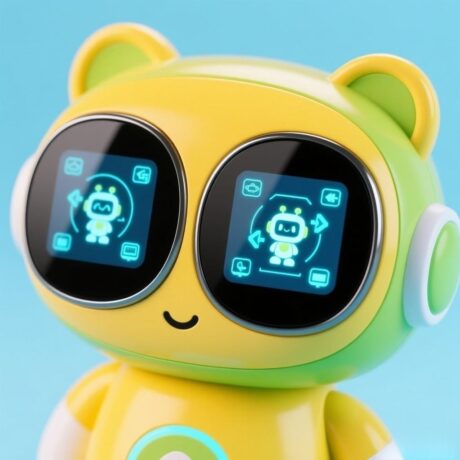
In educational companion toys, the circular screen becomes the core bridge for emotional connection. When a child reads, the toy’s eyes sparkle with focused attention; during bedtime stories, the screen displays a warm, sleepy gaze; when a child achieves something, the toy’s face blossoms with a proud smile. This visual feedback creates a deep emotional connection, transforming the toy from a cold electronic device into a true emotional companion.
In therapeutic assistive toys, the display can simulate progressive relaxation guidance through eye contact or provide predictable, gentle facial expression references for children with autism, aiding in emotion recognition and social learning.
Robot Applications: A Perfect Balance of Function and Emotion
In the field of service robots, this screen balances functionality and approachability. Home assistant robots can use eye direction to indicate their “attention” focus, and simple icons to indicate the task being performed—a music symbol indicates a song is playing, a cloud icon indicates checking the weather, and a shopping cart icon indicates generating a shopping list.
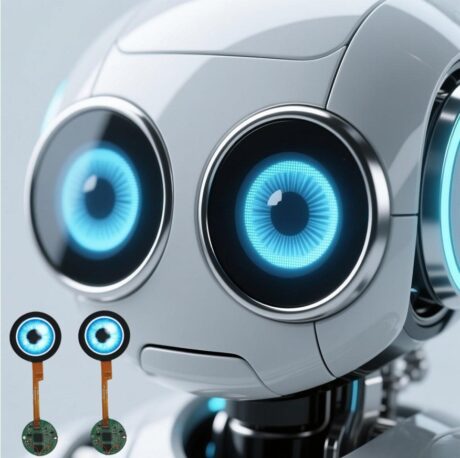
In social robots, the circular screen becomes a rich channel for non-verbal communication. Studies have shown that appropriate eye contact and facial expressions can significantly improve the comfort and trust levels of human-computer interaction. Robots can break the oppressive feeling of staring by briefly blinking, and express curiosity or surprise with raised eyebrows, creating a more natural and fluid social experience.
User Experience Behind the Technical Details
The circular design of this display is not simply a rectangular screen cut into a circle; rather, pixel arrangement and driving algorithms are optimized for circular displays, ensuring smooth and natural edge display. Its high brightness (typically 300-500 Nissen) und großer Betrachtungswinkel (over 160 Grad) ensure clear content presentation under various lighting conditions and viewing angles.
Low power consumption allows the display to operate for extended periods, even with continuous dynamic display, which is crucial for battery-powered mobile toys and robots. Meanwhile, its industrial-grade operating temperature range (-20°C bis 70 °C) ensures the device’s reliability in various environments.
Future Outlook: A Design Revolution Led by Circular Screens
With the convergence of IoT and AI technologies, the application prospects of this circular programmable display continue to expand. In der Zukunft, we may see:
Multi-screen collaboration systems: Integrating multiple circular screens into different parts of a robot to create a full-body expression system.
Augmented reality overlay: Combining with transparent display technology to overlay virtual facial expressions onto a real environment.
Biometric integration: Integrating a miniature camera beneath the screen to achieve eye tracking and emotional response.
Synchronized haptic feedback: Synchronizing changes in screen facial expressions with the doll’s body vibrations and temperature changes, creating a multi-sensory experience.
Abschluss: Small screen, big change
In today’s increasingly ubiquitous smart devices, the warmth of technology no longer depends solely on its powerful functionality, but also on the human touch and emotional resonance of interaction. This 1.6-inch programmable circular serial port display, with its ingenious design, excellent display effects, and flexible programming capabilities, is infusing smart dolls and robots with a true “soul.”
It reminds us that the most cutting-edge technology is often presented most warmly; the most complex engineering ultimately serves the simplest human needs—to be understood, to be responded to, and to be accompanied. In this small circular window, we see not only the changes in pixel brightness but also the infinite possibilities of the future human-machine relationship.
As more developers explore the potential of this display, smart dolls will become more empathetic, and robots will become more approachable and natural. This small, round screen is quietly opening the door to a more human-centered technological era.