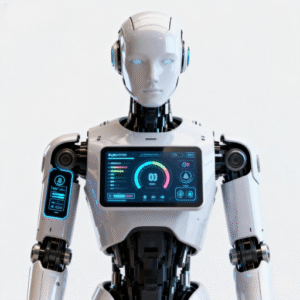

In the rapidly evolving world of robotics, human-machine interaction (IHM) is the key to seamless integration. As humanoid robots move from factory floors into homes, hospitals, and service industries, how they communicate with us becomes paramount. Beyond speech and movement, visual feedback plays a critical role. This is where the 10.1-inch LCD display is finding an exciting new application: serving as the dynamic “chest screen” for humanoid robots.
More Than Just a Face: The Chest as a Communication Hub
While a robot’s head might house animated eyes, the chest offers a larger, more stable canvas for information. Integrating a 10.1-inch TFT LCD module into a robot’s torso transforms it into a central communication dashboard. This screen size strikes the perfect balance—it is large enough to display rich, complex data without being obtrusive to the robot’s overall design.

What Does the Chest Display Show?
The applications are vast and designed to enhance user trust and clarity:
System Status: Real-time battery life, connectivity strength, and operational mode (por exemplo, “Listening,” “Processing,” “Idle”).
Expressive Content: Animated emojis or waveforms that visualize the robot’s “mood” or audio input, adding a layer of non-verbal communication.
Contextual Information: If the robot is guiding a user through a facility, the chest screen can show a map. If it’s delivering a message, the text can appear here.
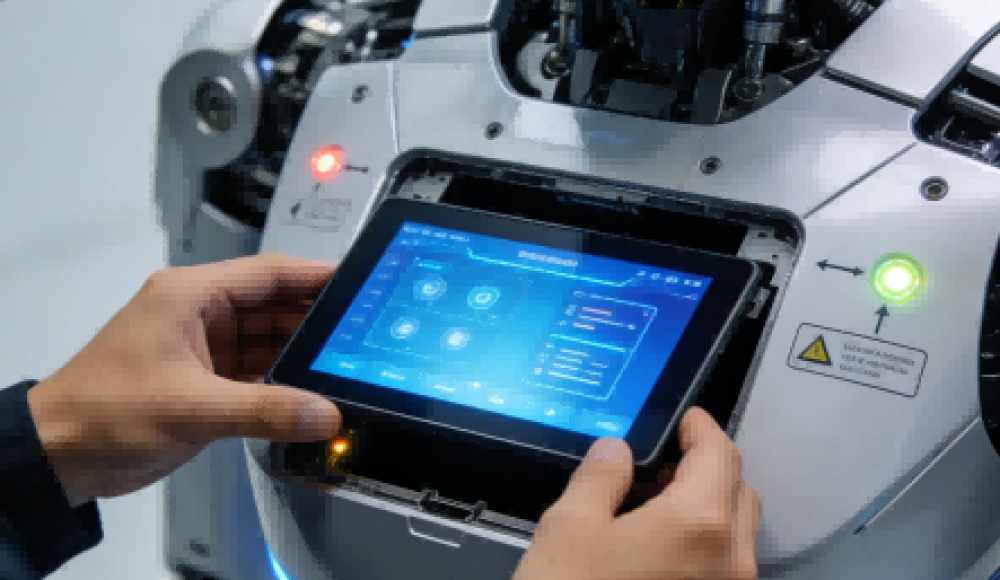
Diagnostic Data: For technical or industrial robots, the screen can display internal diagnostics, error codes, or maintenance schedules.
Why the 10.1 Inch Size Matters
From a design and engineering perspective, the 10.1-inch display is ideal for the chest area of a humanoid robot. It provides high visibility from a distance, ensuring that the information is readable during interaction. Modern 10.1-inch LCD screens offer high resolution (such as 1280×800 or 1024×600) e ângulos de visualização largos, ensuring that the displayed content is vibrant and clear whether the user is standing directly in front or slightly to the side.
Além disso, these displays are becoming increasingly energy-efficient and durable, which is crucial for mobile robots that rely on battery power and must operate in various environments.
Conclusão
As humanoid robots become more prevalent, the demand for intuitive communication interfaces will grow. The 10.1-inch LCD display is emerging as a key component in this field, turning a robot’s chest into a vital source of information and emotional connection. It is not just a screen; it is the robot’s dashboard, its mood ring, and its window to the user, all rolled into one.