

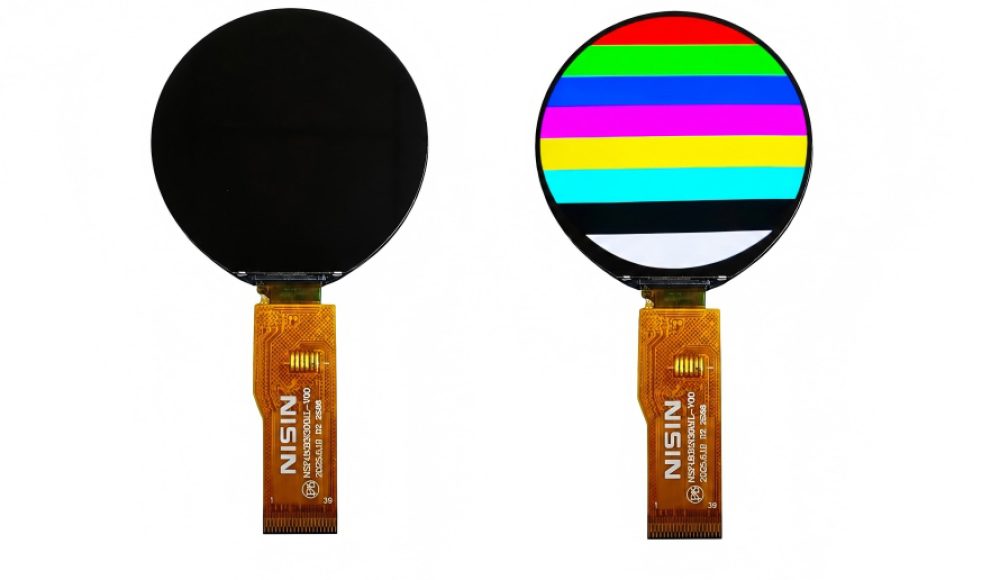
A round display does not automatically make a product better. The real question is whether its shape, Größe, and performance fit the product.
A 1.8 inch round TFT LCD module makes sense when the product needs a compact circular interface. Tragbare Geräte, smart instruments, Tragbare Elektronik, and embedded controls can all benefit from this format.
The screen shape also affects the mechanical design. A rectangular display may leave unused space inside a circular enclosure. A round display follows the enclosure more naturally.
Jedoch, size and shape are only the starting point. Engineers also need to look at resolution, Helligkeit, Betrachtungswinkel, Schnittstelle, Temperaturbereich, und Touch-Optionen.
When Does a Round Display Make Sense?
The mechanical design often provides the clearest answer. Many compact products already use circular housings. Smartwatches, Meter, gauges, and control interfaces are good examples. A rectangular screen can create empty corners in these designs. A circular screen solves this problem in a more direct way. It follows the shape of the product and gives designers more freedom with the user interface. The interface itself also matters. Circular screens work well with gauges, Statusanzeigen, timers, Symbole, and radial menus. They can also support compact graphical interfaces. This does not mean every small device needs a round display. If the product mainly shows long text, Tische, or wide graphs, a rectangular screen may still make more sense.
Does a Small Display Need High Resolution?
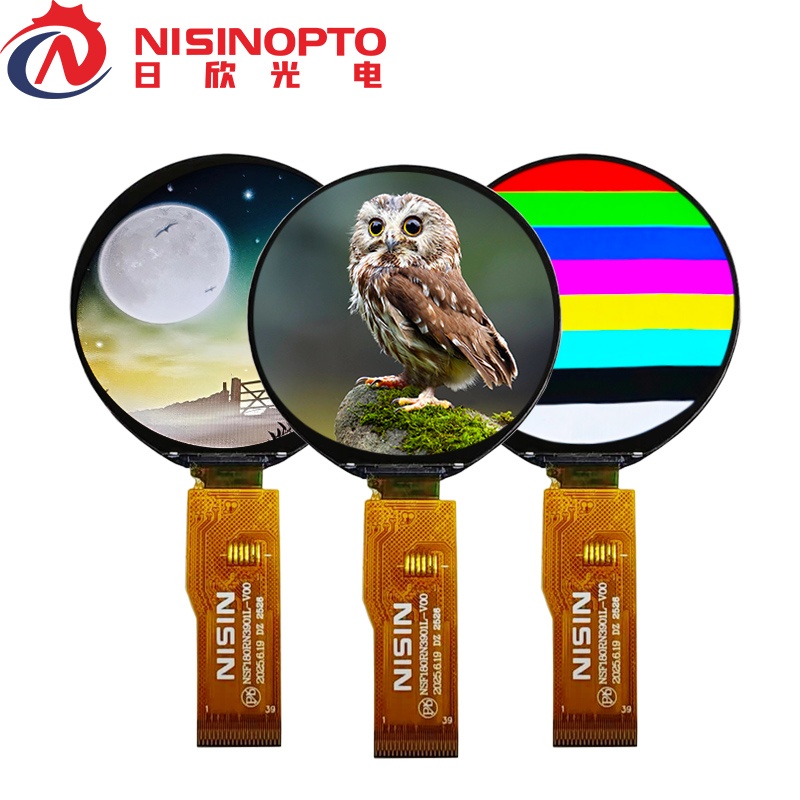
A small screen still needs to present information clearly. The NISIN 1.8 inch round TFT LCD module uses a 360 × 360 Auflösung. It reaches around 326 PPI at this screen size.
That pixel density helps keep small interface elements sharp. Text looks clearer. Icons retain their details. Curved lines also appear smoother.
This matters when the interface contains several types of information. A compact device may need to show numbers, Symbole, status information, and graphics at the same time.
Resolution alone does not determine image quality. Jedoch, a high pixel density gives designers more room to create detailed interfaces on a small display.
How Important Is Brightness?
Brightness becomes more important when the product moves outside controlled indoor environments.
A screen may look excellent during development under office lighting. The same screen can become difficult to read under strong sunlight.
The NISIN module offers brightness up to 400 cd/m². This level gives product designers more flexibility when developing portable or outdoor-facing equipment.
Brightness is not the only factor that affects readability. Cover glass, surface treatment, Kontrast, Betrachtungswinkel, and ambient light also matter. Aus diesem Grund, engineers should evaluate the complete display system instead of looking at brightness alone.
What About Color Performance?
Color does more than make an interface look attractive. Many embedded products use color to communicate information. Green can indicate normal operation. Red can highlight an alarm. Other colors can separate different functions or operating modes.
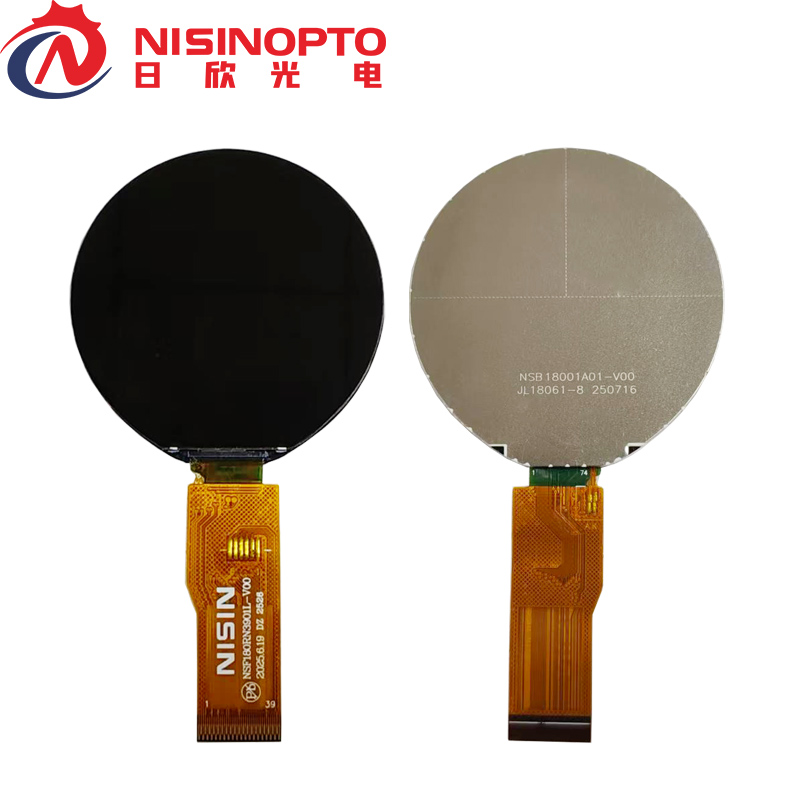
The NISIN 1.8 inch round TFT LCD module supports 16.7 Millionen Farben. This allows the display to produce smoother color transitions and richer graphical content.
The benefit depends on the application. A simple numerical display may not need advanced color performance. A smart device with icons, Grafik, and visual indicators can make better use of it.
Why Does Viewing Angle Matter?
Users rarely look at a small embedded display from exactly the same position.
A wearable device moves with the user’s wrist. An instrument may sit at an angle. A control panel may need to serve users standing in different positions.
A narrow viewing angle can make the interface difficult to read in these situations.
NISIN uses a TFT panel with full-viewing-angle technology for this module. Users can view the screen from different directions while maintaining consistent image quality.
This feature becomes especially useful when the product does not control the user’s viewing position.

Which Interface Should You Choose?
The display interface affects the hardware design from the beginning.
Engineers need to consider the processor, PCB-Layout, wiring, Stromverbrauch, and available communication bandwidth. The display interface should fit the rest of the system.
The NISIN module supports both MIPI and QSPI.
MIPI provides a high-speed interface with low power consumption. It can suit platforms that require faster display communication.
QSPI uses a simpler wiring approach. It can help developers working with compact hardware designs or platforms that support this interface.
Supporting both interfaces gives product developers more flexibility. They can select the connection method that fits their motherboard and processor architecture.
Can a 1.8 Inch Round TFT LCD Module Handle Temperature Changes?
Temperature often becomes a real concern after the prototype stage. A product may work well inside a laboratory. Its operating environment may look very different after launch. Außenausrüstung, Tragbare Elektronik, Industrieinstrumente, and vehicle-related products can experience significant temperature changes.
The NISIN module supports an operating temperature range of -20°C to +70°C. Its storage temperature range reaches -30°C to +80°C.
These specifications give developers more room when designing products for variable environments.
Engineers should still check the complete system. The LCD module may support a certain temperature range, while the battery, processor, enclosure, or other components may have different limits.
When Does Customization Become Important?
Standard specifications do not always match a commercial product perfectly.
The mechanical structure may require a specific touch panel. The motherboard may need a particular connection arrangement. The enclosure may also require changes to the module design.
This makes customization an important factor when choosing a TFT LCD module manufacturer.
NISIN provides customization support for different project requirements. The company can adapt the touch panel configuration, including capacitive and resistive touch solutions.
This approach gives OEM and ODM customers more flexibility during product development. Instead of redesigning the entire device around a standard module, engineers can discuss the display requirements with the manufacturer.
Where Can a 1.8 Inch Round TFT LCD Module Be Used?
The value of a round display comes from the product around it.
Potential applications include wearable electronics, intelligente Geräte, compact measuring instruments, portable equipment, Fahrzeugelektronik, und eingebettete Steuerungssysteme.
The user interface should also match the circular screen. Gauges, numerical indicators, Symbole, timers, and radial controls can work particularly well.
Designers should avoid simply placing a rectangular interface inside a round display. The circular shape creates an opportunity to rethink the layout.
A well-designed interface can use the entire display area more effectively. It can also make the screen feel like an integrated part of the product rather than a separate component.
What Should Engineers Check Before Choosing the Module?
Engineers should look beyond screen size when evaluating a 1.8 inch round TFT LCD module.
Start with the mechanical drawing. Check the available installation space and mounting requirements.
Then review the display performance. Auflösung, Pixeldichte, Helligkeit, color depth, and viewing angle should match the planned interface.
Nächste, check the electrical requirements. Make sure the interface works with the processor and motherboard. MIPI and QSPI can provide different options depending on the hardware platform.
Environmental conditions also deserve attention. Compare the module’s operating temperature with the actual conditions that the final product will encounter.
Endlich, consider customization and supplier support. A standard module may work for a prototype, but commercial products often need changes during development.
Nisin 1.8 Inch Round TFT LCD Module for Product Development
NISINs 1.8 inch round TFT LCD module combines a compact circular display with 360 × 360 resolution and 326 PPI. It supports 16.7 million colors and reaches brightness of up to 400 cd/m².
The module supports both MIPI and QSPI interfaces. Its -20°C to +70°C operating temperature range also suits a range of embedded product environments. NISIN can also customize the module for specific project requirements. Touch panel options include capacitive and resistive configurations.
For product developers, the decision comes down to application requirements. If the device benefits from a circular interface, compact dimensions, klare Grafiken, flexible connectivity, and touch customization, A 1.8 inch round TFT LCD module can be a practical choice. The important point is not simply choosing a round screen. It is choosing a display that fits the product’s mechanical structure, Schnittstelle, electronics, and operating environment.