
Una pantalla pequeña tiene que hacer más que caber en un dispositivo compacto. También debe presentar la información con claridad., especially when users operate the equipment in different lighting conditions. A screen that looks perfectly readable indoors may become difficult to view under direct sunlight. For manufacturers of portable electronics, navigation equipment, e instrumentos industriales, this is an important consideration during display selection.
A 2.4-inch TFT LCD display is commonly considered for products where installation space is limited but a visual interface is still necessary. At this screen size, resolución, lighting conditions, display technology, and color reproduction all influence the viewing experience.
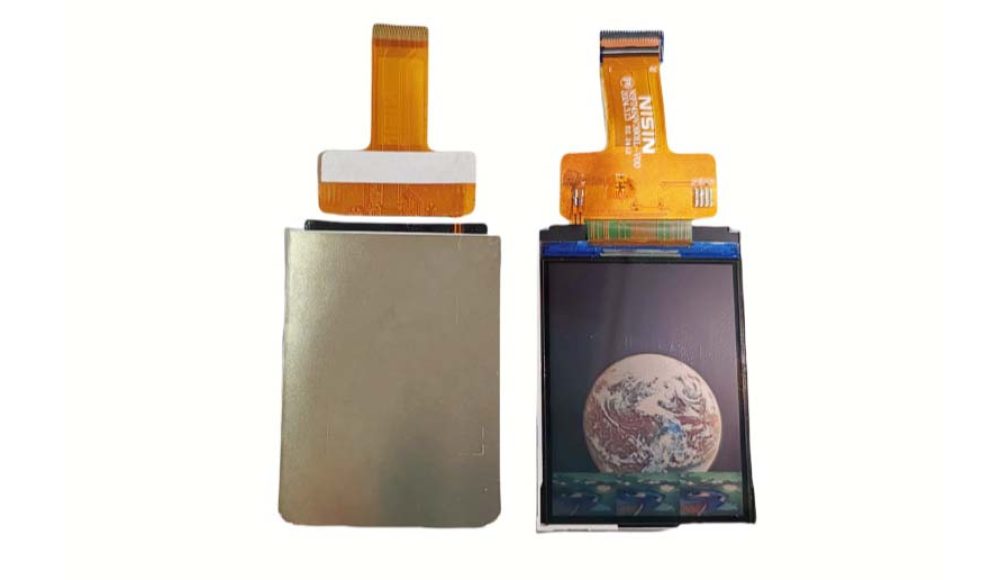
One option worth considering is a transflective LCD display. Unlike a conventional screen that relies mainly on its backlight, this technology uses both reflected ambient light and transmitted backlight to present information. el nisin 2.4-inch transflective TFT LCD display combines this approach with a 240 × 320 resolution and an RGB 18-bit interface, making it suitable for applications that require compact dimensions and outdoor visibility.

1. Can a Small LCD Screen Remain Readable Under Direct Sunlight?
Outdoor visibility is one of the more challenging requirements for LCD displays. Sunlight falling directly onto a screen can reduce the contrast between the displayed content and its background. Como resultado, texto, iconos, and other information may become harder to distinguish.
Increasing backlight brightness is one way to address this issue, but it is not always the most practical solution. Higher brightness can increase power consumption, which is particularly relevant for portable devices operating on batteries.
This is why transflective technology is worth attention.
A sunlight readable LCD display with a transflective design uses ambient light to help make screen content visible. Under bright conditions, the reflective component makes use of surrounding light. When ambient light becomes insufficient, the transmissive component allows the backlight to illuminate the display.
The benefit is flexibility across different lighting environments. A device used both indoors and outdoors does not have to rely entirely on backlight illumination to maintain visibility.
For manufacturers developing outdoor reading devices, vehicle navigation equipment, e instrumentos portátiles, this type of display technology can be a practical consideration.
2. How Does Transflective Technology Work in Different Lighting Conditions?
The working principle of a transflective LCD is based on combining reflective and transmissive properties within the display structure.
In a conventional transmissive LCD, the backlight provides the illumination needed to view the image. A reflective LCD, por otro lado, uses ambient light reflected from the display surface. A transflective design brings these two approaches together.
This allows the screen to respond to changes in surrounding light. In a well-lit outdoor environment, reflected light helps users view the displayed information. In darker surroundings, the backlight provides additional illumination.
For equipment manufacturers, this is particularly useful when the final product will not always be used in a controlled indoor environment. Think of a handheld instrument taken between a workshop and an outdoor work area, or a navigation device exposed to changing sunlight during use.
The NISIN 2.4-inch transflective LCD display is designed around this technology. Its application value lies in providing a display option for devices that need to handle different lighting conditions without relying solely on backlight illumination.
Actual visibility will still depend on factors such as panel reflectance, backlight performance, ángulo de visión, and the contrast of the displayed content. These specifications should be checked against the requirements of the finished device.
3. Does 240 × 320 Resolution Provide Enough Detail on a 2.4-Inch Screen?
A compact display has limited physical space, so using that space effectively matters. Resolution determines how many pixels are available to form text, iconos, and images. It therefore affects how much visual information can be presented and how detailed that information appears.
The NISIN 2.4-inch TFT LCD screen features a resolution of 240 × 320 píxeles. This portrait-oriented format can support compact menus, información de estado, simple graphics, and other interface elements commonly found in portable electronic products.
Sin embargo, resolution alone does not determine whether a screen is easy to read. Tamaño de fuente, line spacing, diseño de iconos, and viewing distance also play important roles.
Por ejemplo, displaying too much information in a small area can make an interface feel crowded, even when the pixel resolution is sufficient. A better approach is to prioritize frequently used information and keep the layout clear.
When integrating a 240×320 Pantalla LCD TFT, product developers should consider the relationship between screen resolution and the actual user interface. The goal is not simply to display more content, but to make important information easy to recognize.

4. How Does an RGB 18-Bit Interface Affect Image Presentation?
Color is another part of the viewing experience, particularly when a device uses visual indicators, graphical menus, or colored status information.
The NISIN display adopts an RGB 18-bit interface, with six bits assigned to each of the red, verde, and blue channels. This provides up to approximately 262,144 possible color combinations.
For a compact electronic display, this color depth can support a more varied presentation of interface elements. Different colors can help distinguish operating modes, highlight important information, and make graphical content easier to interpret.
The interface also matters from an engineering perspective. A display module must communicate correctly with the host processor or controller. Before selecting an RGB 18-bit LCD display, manufacturers should confirm signal compatibility, timing requirements, and the capabilities of the main control system.
It is worth remembering that the interface is only one part of the overall image quality. The LCD panel itself, controlador de pantalla, signal processing, and software configuration all influence the final result.
5. What Should OEM Manufacturers Check Before Integrating a 2.4-Inch TFT LCD?
A display may meet the basic resolution and interface requirements but still need further evaluation before it can be used in a finished product. For OEM and ODM projects, checking integration details early can help reduce development adjustments later.
Here are several points worth reviewing:
Display dimensions and installation space: Confirm that the module fits the product enclosure and that its mounting structure is compatible with the device design.
Lighting conditions: Consider whether the screen will be used indoors, al aire libre, or in environments where lighting changes frequently. This helps determine whether transflective technology is appropriate.
Resolution and interface layout: Check whether 240 × 320 pixels can accommodate the intended interface, including text, iconos, and status information.
Electrical compatibility: Verify the RGB 18-bit interface requirements, signal timing, power supply, and connection method against the host system.
Viewing requirements: Consider how users will hold or operate the device, including the expected viewing direction and distance.
These details are especially important for compact products because there is often limited room to make mechanical or electronic adjustments once the enclosure and circuit board have been finalized.
6. Where Can a 2.4-Inch Sunlight Readable LCD Display Be Used?
A 2.4-inch screen can be a suitable choice when a product needs a compact visual interface without requiring a large display area.
Por ejemplo, outdoor reading devices may need to show text and basic information under natural light. Vehicle navigation equipment requires information to remain visible as surrounding light changes. Portable instruments and handheld electronic devices may also benefit from a screen that can operate in both indoor and outdoor environments.
Industrial handheld equipment is another potential application. Operators may need to check measurements, estado de funcionamiento, or simple interface information while moving between different working areas.
For these products, a 2.4-inch sunlight readable TFT LCD display offers a combination of compact size and transflective display characteristics worth evaluating.
Por supuesto, the final selection should also account for other product requirements, including operating temperature, consumo de energía, protección ambiental, and mechanical design. These specifications need to be confirmed separately according to the intended application.

7. NISIN 2.4-Inch Transflective TFT LCD Display
For manufacturers looking for a compact LCD solution with outdoor visibility, the NISIN 2.4-inch transflective display brings together several useful characteristics.
Its transflective technology supports viewing under different lighting conditions, while the 240 × 320 resolution provides space for text, iconos, and basic graphical interfaces. The RGB 18-bit interface supports color signal transmission for electronic products that require a more detailed visual presentation.
These specifications make the display worth considering for outdoor reading devices, vehicle navigation equipment, instrumentos portátiles, and embedded electronic systems.
Before moving forward with integration, buyers should confirm the complete mechanical and electrical specifications with the display supplier. This includes dimensions, interface timing, connector details, and optical requirements.
Conclusión
The readability of a 2.4-inch TFT LCD display comes down to how well its technology and specifications match the environment in which it will be used. Resolution affects the level of detail, color depth contributes to image presentation, and interface compatibility determines how the display works with the host system. For outdoor applications, the ability to make use of ambient light can be just as important as the screen’s pixel count.
The NISIN 2.4-inch transflective TFT LCD display combines a 240 × 320 resolution with an RGB 18-bit interface and a design intended for sunlight-readable applications. For manufacturers developing compact electronic devices, these are useful starting points when evaluating a display for both indoor and outdoor use.