

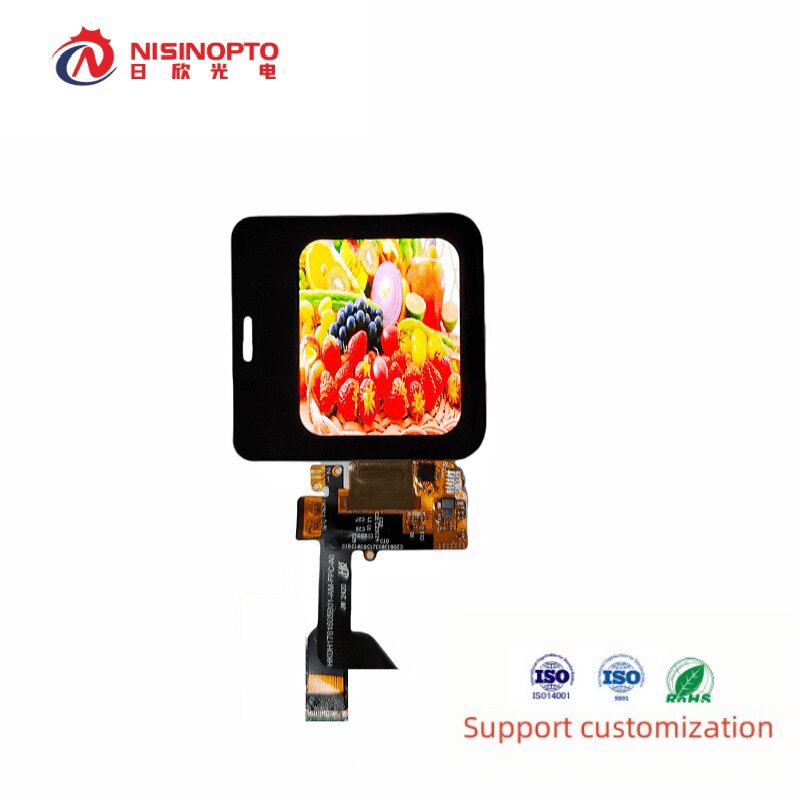
À mesure que les appareils électroniques deviennent plus petits et plus riches en fonctionnalités, les modules d'affichage doivent fournir plus que de simples informations visuelles de base. Manufacturers are looking for compact displays that combine clear image quality, interaction tactile réactive, low-profile construction, and flexible integration options.
A 1.78-inch touch AMOLED display module is one solution for products where screen space is limited but display performance remains important. Avec une résolution de 368 × 448 pixels, a slim 0.8 mm module thickness, and support for both MIPI and SPI interfaces, this display is designed for compact electronic applications that require detailed visual output and touch functionality.
But where does a display of this size offer the most value? From smart wearables to medical instruments and vehicle displays, several industries can benefit from its combination of compact dimensions and display performance. Let’s explore its potential applications and the technical factors manufacturers should consider.
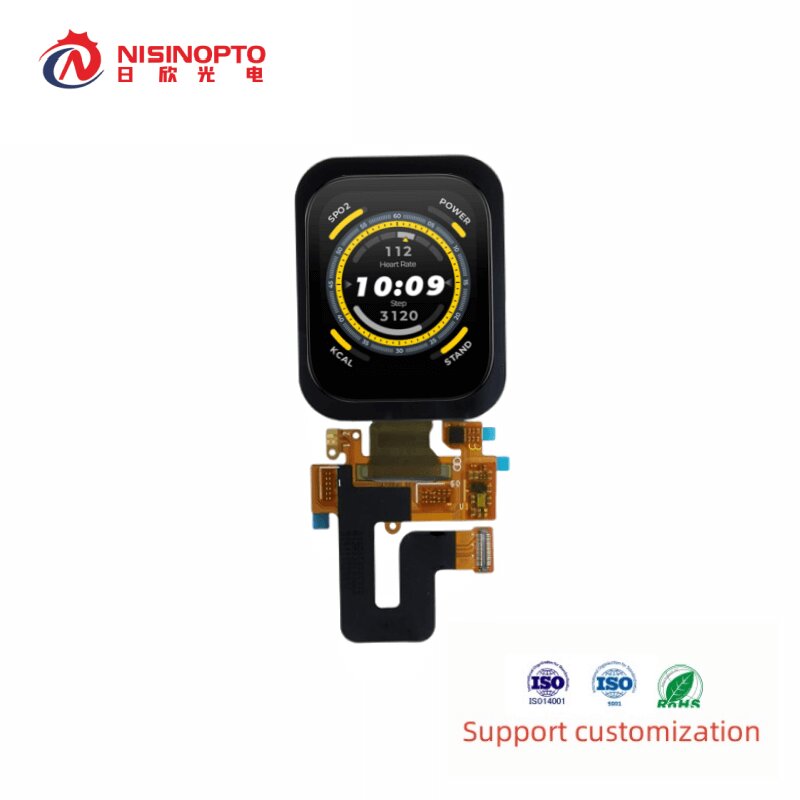
1. Appareils portables intelligents: More Display Information in a Compact Space
Smart wearables are among the most suitable applications for small Modules d'affichage AMOLED. Montres intelligentes, trackers de fitness, and other wearable electronics need to present information such as time, avis, activity records, health-related readings, and device settings within a limited screen area.
Pour ces produits, display quality directly affects how users interact with the device.
The 1.78-inch AMOLED display offers a resolution of 368 × 448 pixels and supports 16.7 millions de couleurs, allowing detailed icons, texte, and graphical interfaces to be displayed clearly. C'est 60,000:1 contrast ratio helps create a noticeable distinction between bright and dark elements, making interface content easier to distinguish.
Touch support also allows users to navigate menus, switch functions, and interact with on-screen controls without relying entirely on physical buttons.
Another important consideration is physical size. With an overall module dimension of 30.6 × 37.99 mm and a thickness of only 0.8 mm, it can be considered for wearable devices where internal space and product thickness are important design constraints.
Les applications potentielles incluent:
- Smartwatches and fitness watches
- Health monitoring wearables
- Compact activity trackers
- Touch-enabled wearable control devices
For wearable device manufacturers, combining display clarity, interaction tactile, and a slim structure can help create a more integrated product design.
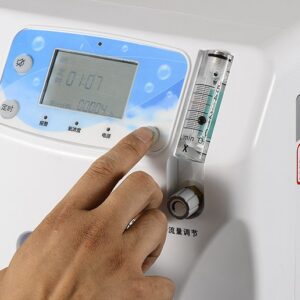
2. Instruments médicaux: Clear Visual Feedback for Device Operation
Medical and healthcare equipment often relies on compact displays to present operating information, measurement results, état de l'appareil, and user instructions.
In portable medical instruments, the display must fit into a limited housing while providing readable information and convenient interaction. A small touch AMOLED display can support these requirements in selected device designs.
Le 368 × 448 resolution provides space for displaying numerical readings, indicateurs d'état, icônes, and menu information. C'est 700 cd/m² brightness is another useful specification when the device needs to operate in different indoor lighting conditions.
The module also supports a wide 178° viewing angle, helping maintain consistent image visibility when users view the screen from different positions.
For medical device developers, touch functionality can simplify interface design by allowing users to access settings and operating menus directly on the display.
Cependant, the final suitability of a display for medical equipment depends on the device’s intended function, electrical requirements, conditions environnementales, and applicable regulatory standards. Display specifications alone do not establish medical certification or clinical suitability.
Les applications potentielles incluent:
- Portable monitoring equipment
- Handheld diagnostic instruments
- Compact healthcare devices
- Medical equipment control interfaces
When selecting a display for medical applications, manufacturers should also evaluate interface compatibility, température de fonctionnement, integration requirements, and long-term product reliability.
3. Vehicle Displays: Compact Screens for In-Vehicle Information
Modern vehicle electronics increasingly incorporate compact displays into dashboards, panneaux de contrôle, and auxiliary systems. Not every automotive display needs to be large. Smaller modules can serve specific functions where a dedicated screen is more practical than a full-size display.
A 1.78-inch touch AMOLED display module may be considered for compact vehicle interfaces that present operating status, paramètres, or supplementary information.
C'est 60,000:1 contrast ratio supports strong differentiation between bright and dark image elements, tandis que le 3 ms response time helps display changing information with less visible motion smear.
The module’s 700 cd/m² brightness can also support visibility in relatively bright environments, although actual readability depends on ambient lighting, lamelle de verre, liaison optique, et angle d'installation.
Temperature performance is another consideration for vehicle-related applications. The module has an operating temperature range of -20°C to +70°C and a storage temperature range of -30°C to +80°C. These specifications provide useful reference points when evaluating whether it meets a particular vehicle electronics project’s environmental requirements.
Les applications potentielles incluent:
- Auxiliary vehicle information displays
- Panneaux de commande compacts
- In-vehicle electronic interfaces
- Vehicle accessory display systems
For automotive manufacturers and electronics developers, it is important to verify temperature requirements, vibration resistance, electrical compatibility, and other application-specific conditions before integrating a display into a vehicle system.
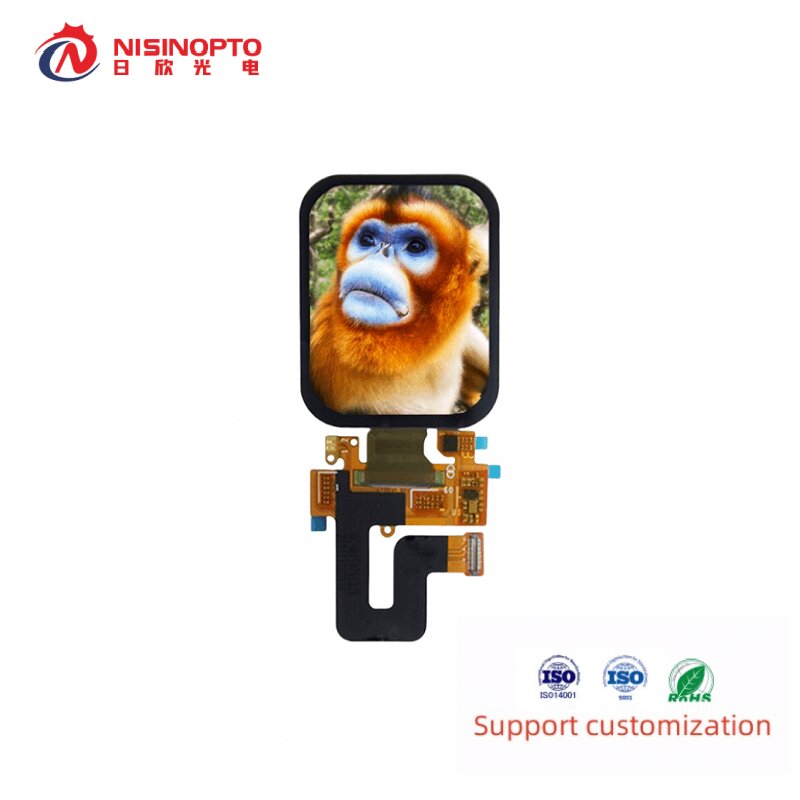
4. Why AMOLED Technology Matters in Small Display Applications
Choosing a display module involves more than comparing screen dimensions and resolution. Display technology also affects contrast, response behavior, viewing experience, and overall product design.
AMOLED technology uses self-emissive pixels, meaning each pixel produces its own light rather than relying on a conventional backlight. This allows individual pixels to be switched off when displaying black, contributing to high contrast and deep black levels.
For compact electronic devices, this can provide several practical advantages.
High Contrast for More Distinct Visual Content
With a contrast ratio of 60,000:1, the module can produce clear differences between bright and dark areas. This is useful for interfaces containing small text, icônes, and contrasting graphical elements.
Fast Response for Dynamic Interfaces
Le 3 ms response time supports smoother transitions when displaying changing content. This can be beneficial for animated interfaces, scrolling menus, and real-time information displays.
Grand angle de vision
The 178° viewing angle helps maintain image consistency when the screen is viewed from different directions, which is particularly useful in wearable and handheld products.
Rich Color Presentation
Support for 16.7 million colors allows detailed graphics, colorful interface elements, and visual indicators to be presented with greater color variation.
These characteristics make AMOLED technology worth considering for electronic products where display quality and compact design need to work together.
5. What Should Manufacturers Check Before Selecting a 1.78-Inch Touch Display?
Even when a display module meets basic size and performance requirements, it still needs to match the electrical, mécanique, and functional requirements of the target device.
Before selecting a 1.78-inch touch AMOLED display, product developers should review several key specifications.
| Selection Factor | Available Specification | Pourquoi c'est important |
|---|---|---|
| Display resolution | 368 × 448 pixels | Determines the level of image detail |
| Technologie d'affichage | AMOLED | Affects contrast and image presentation |
| Luminosité | 700 cd/m² | Helps evaluate visibility under different lighting conditions |
| Rapport de contraste | 60,000:1 | Supports clear separation between bright and dark content |
| Temps de réponse | 3 MS | Relevant to dynamic screen content |
| Color support | 16.7 millions de couleurs | Provides a wider range of interface colors |
| Interface | MIPI and SPI | Offers different integration options for compatible host systems |
| Angle de vision | 178° | Supports viewing from different directions |
| Épaisseur du module | 0.8 mm | Important for compact product structures |
| Température de fonctionnement | -20°C à +70°C | Helps assess environmental compatibility |
Interface compatibility deserves particular attention. Although the module supports both MIPI and SPI, manufacturers should confirm the required interface configuration, compatibilité du contrôleur, signal specifications, and available software support before finalizing their hardware design.
Touch functionality should also be evaluated separately. Developers need to confirm touch controller compatibility, communication requirements, touch accuracy, and the intended user interaction method. A detailed review of these factors can reduce integration issues during prototype development and mass production preparation.
6. How NISIN Supports Display Module Selection and Customization
Selecting a display module is only one part of developing an electronic product. Manufacturers also need to consider mechanical integration, exigences d'interface, fonctionnalité tactile, and the specific operating environment of their devices.
NISIN provides display module solutions for different electronic application requirements, with product specifications and customization options that can be evaluated according to project needs.
For the 1.78-inch AMOLED display module, several technical characteristics make it relevant to compact display applications:
- Compact dimensions: Le 30.6 × 37.99 mm module size and 0.8 mm thickness support space-conscious product designs.
- High-resolution output: Le 368 × 448 resolution provides detailed visual presentation.
- Dual-interface support: MIPI and SPI interfaces offer integration options for compatible hardware platforms.
- Touch functionality: Supports interactive interfaces in suitable device designs.
- Display performance: 700 CD / m² luminosité, 60,000:1 rapport de contraste, et 3 temps de réponse en ms.
- Environmental specifications: Operating temperatures from -20°C to +70°C.
For projects with specific requirements, customization can be discussed in terms of appearance, configuration des interfaces, and functional modules, subject to technical feasibility.
Whether the target product is a wearable device, a portable medical instrument, or a compact vehicle display, NISIN can help manufacturers evaluate display specifications against their project requirements.
Conclusion: Choosing the Right Display for Compact Electronic Products
A 1.78-inch touch AMOLED display module can serve different purposes across smart wearables, instruments médicaux, et électronique du véhicule. Sa structure compacte, 368 × 448 résolution, 700 CD / m² luminosité, rapport de contraste élevé, and MIPI/SPI interface support make it a candidate for electronic products that require both visual performance and space-efficient integration.
Cependant, the right display is not simply the one with the highest specifications. It must also match the device’s electrical design, structure mécanique, touch requirements, et environnement opérationnel.
NISIN offers display module solutions that manufacturers can evaluate according to their application and customization needs. By reviewing these requirements early in product development, engineering teams can make more informed decisions and select a display module that fits their intended design.