

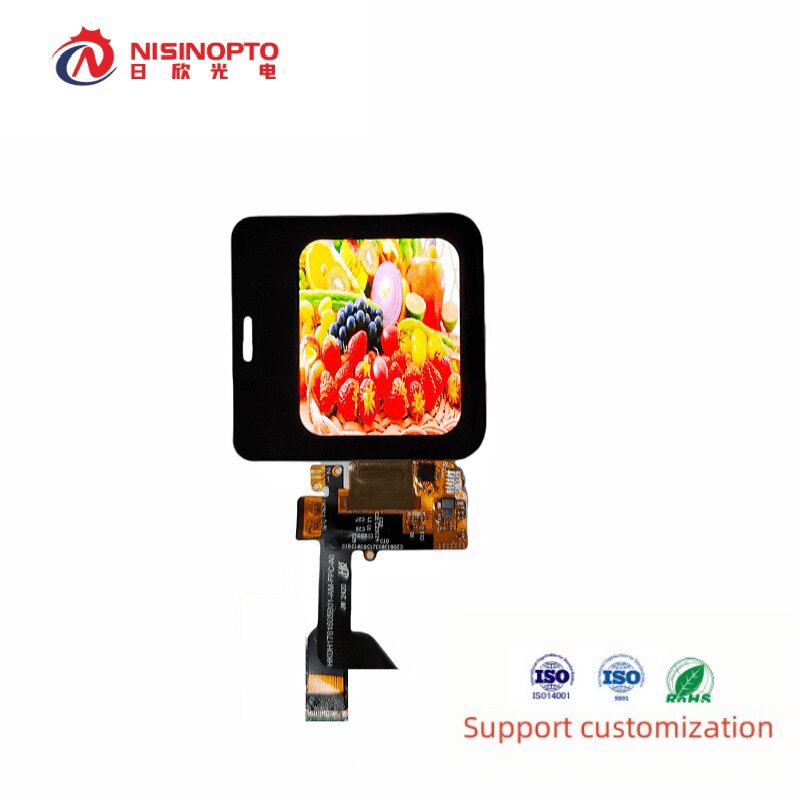
As electronic devices become smaller and more feature-rich, display modules need to deliver more than just basic visual information. Manufacturers are looking for compact displays that combine clear image quality, responsive touch interaction, low-profile construction, and flexible integration options.
A 1.78-inch touch AMOLED display module is one solution for products where screen space is limited but display performance remains important. With a resolution of 368 × 448 pixels, a slim 0.8 mm module thickness, and support for both MIPI and SPI interfaces, this display is designed for compact electronic applications that require detailed visual output and touch functionality.
But where does a display of this size offer the most value? From smart wearables to medical instruments and vehicle displays, several industries can benefit from its combination of compact dimensions and display performance. Let’s explore its potential applications and the technical factors manufacturers should consider.
1. Smart Wearables: More Display Information in a Compact Space
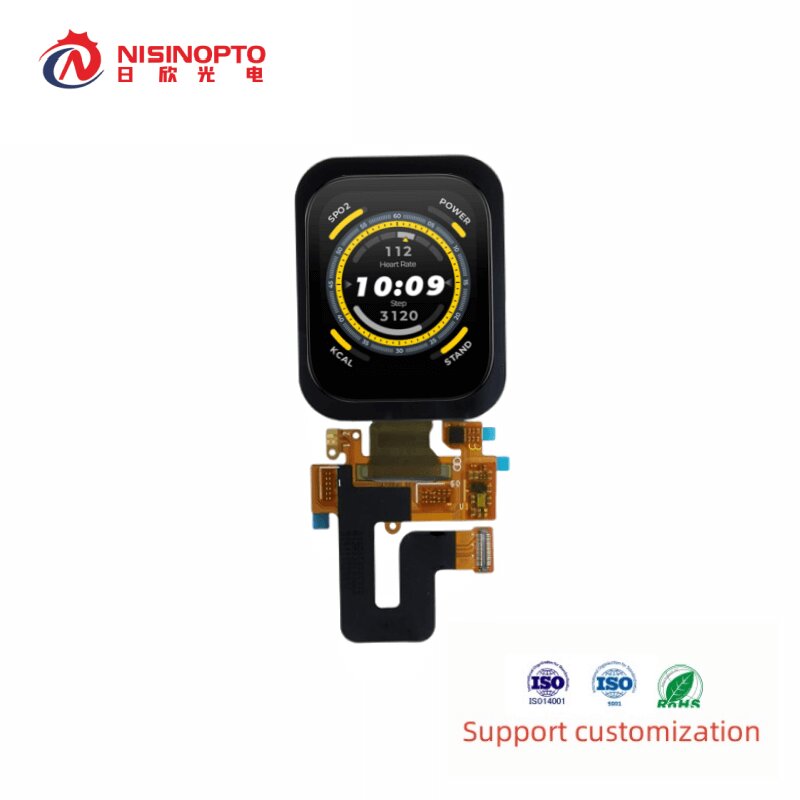
Smart wearables are among the most suitable applications for small AMOLED display modules. Smartwatches, fitness trackers, and other wearable electronics need to present information such as time, notifications, activity records, health-related readings, and device settings within a limited screen area.
For these products, display quality directly affects how users interact with the device.
The 1.78-inch AMOLED display offers a resolution of 368 × 448 pixels and supports 16.7 million colors, allowing detailed icons, text, and graphical interfaces to be displayed clearly. Its 60,000:1 contrast ratio helps create a noticeable distinction between bright and dark elements, making interface content easier to distinguish.
Touch support also allows users to navigate menus, switch functions, and interact with on-screen controls without relying entirely on physical buttons.
Another important consideration is physical size. With an overall module dimension of 30.6 × 37.99 mm and a thickness of only 0.8 mm, it can be considered for wearable devices where internal space and product thickness are important design constraints.
Potential applications include:
- Smartwatches and fitness watches
- Health monitoring wearables
- Compact activity trackers
- Touch-enabled wearable control devices
For wearable device manufacturers, combining display clarity, touch interaction, and a slim structure can help create a more integrated product design.
2. Medical Instruments: Clear Visual Feedback for Device Operation
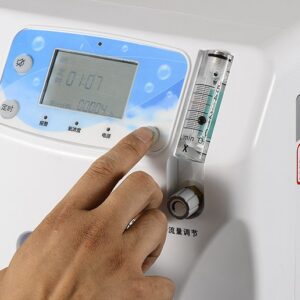
Medical and healthcare equipment often relies on compact displays to present operating information, measurement results, device status, and user instructions.
In portable medical instruments, the display must fit into a limited housing while providing readable information and convenient interaction. A small touch AMOLED display can support these requirements in selected device designs.
The 368 × 448 resolution provides space for displaying numerical readings, status indicators, icons, and menu information. Its 700 cd/m² brightness is another useful specification when the device needs to operate in different indoor lighting conditions.
The module also supports a wide 178° viewing angle, helping maintain consistent image visibility when users view the screen from different positions.
For medical device developers, touch functionality can simplify interface design by allowing users to access settings and operating menus directly on the display.
However, the final suitability of a display for medical equipment depends on the device’s intended function, electrical requirements, environmental conditions, and applicable regulatory standards. Display specifications alone do not establish medical certification or clinical suitability.
Potential applications include:
- Portable monitoring equipment
- Handheld diagnostic instruments
- Compact healthcare devices
- Medical equipment control interfaces
When selecting a display for medical applications, manufacturers should also evaluate interface compatibility, operating temperature, integration requirements, and long-term product reliability.
3. Vehicle Displays: Compact Screens for In-Vehicle Information
Modern vehicle electronics increasingly incorporate compact displays into dashboards, control panels, and auxiliary systems. Not every automotive display needs to be large. Smaller modules can serve specific functions where a dedicated screen is more practical than a full-size display.
A 1.78-inch touch AMOLED display module may be considered for compact vehicle interfaces that present operating status, settings, or supplementary information.
Its 60,000:1 contrast ratio supports strong differentiation between bright and dark image elements, while the 3 ms response time helps display changing information with less visible motion smear.
The module’s 700 cd/m² brightness can also support visibility in relatively bright environments, although actual readability depends on ambient lighting, cover glass, optical bonding, and installation angle.
Temperature performance is another consideration for vehicle-related applications. The module has an operating temperature range of -20°C to +70°C and a storage temperature range of -30°C to +80°C. These specifications provide useful reference points when evaluating whether it meets a particular vehicle electronics project’s environmental requirements.
Potential applications include:
- Auxiliary vehicle information displays
- Compact control panels
- In-vehicle electronic interfaces
- Vehicle accessory display systems
For automotive manufacturers and electronics developers, it is important to verify temperature requirements, vibration resistance, electrical compatibility, and other application-specific conditions before integrating a display into a vehicle system.
4. Why AMOLED Technology Matters in Small Display Applications
Choosing a display module involves more than comparing screen dimensions and resolution. Display technology also affects contrast, response behavior, viewing experience, and overall product design.
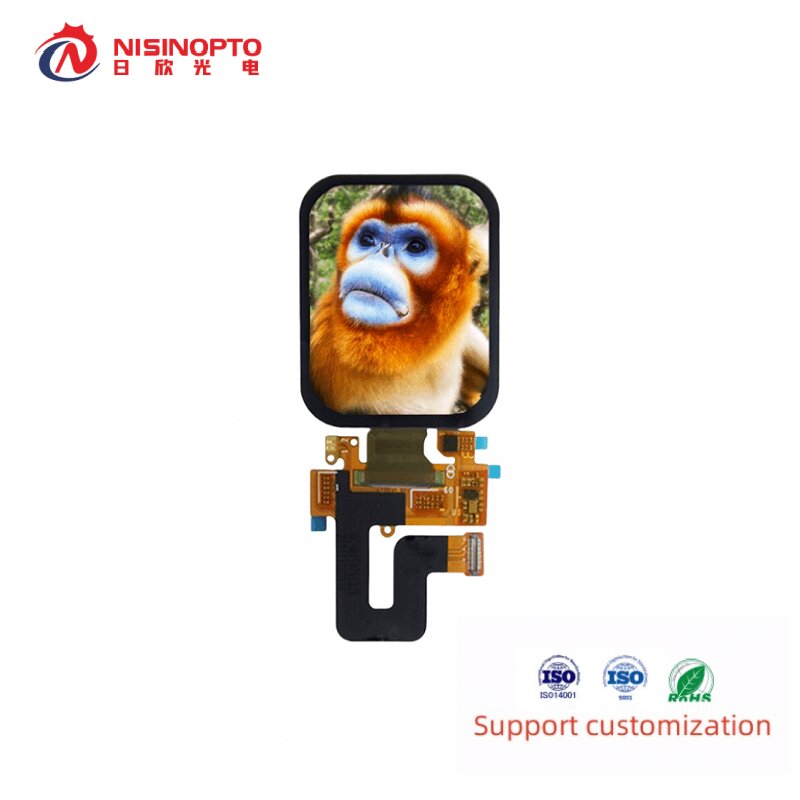
AMOLED technology uses self-emissive pixels, meaning each pixel produces its own light rather than relying on a conventional backlight. This allows individual pixels to be switched off when displaying black, contributing to high contrast and deep black levels.
For compact electronic devices, this can provide several practical advantages.
High Contrast for More Distinct Visual Content
With a contrast ratio of 60,000:1, the module can produce clear differences between bright and dark areas. This is useful for interfaces containing small text, icons, and contrasting graphical elements.
Fast Response for Dynamic Interfaces
The 3 ms response time supports smoother transitions when displaying changing content. This can be beneficial for animated interfaces, scrolling menus, and real-time information displays.
Wide Viewing Angle
The 178° viewing angle helps maintain image consistency when the screen is viewed from different directions, which is particularly useful in wearable and handheld products.
Rich Color Presentation
Support for 16.7 million colors allows detailed graphics, colorful interface elements, and visual indicators to be presented with greater color variation.
These characteristics make AMOLED technology worth considering for electronic products where display quality and compact design need to work together.
5. What Should Manufacturers Check Before Selecting a 1.78-Inch Touch Display?
Even when a display module meets basic size and performance requirements, it still needs to match the electrical, mechanical, and functional requirements of the target device.
Before selecting a 1.78-inch touch AMOLED display, product developers should review several key specifications.
| Selection Factor | Available Specification | Why It Matters |
|---|---|---|
| Display resolution | 368 × 448 pixels | Determines the level of image detail |
| Display technology | AMOLED | Affects contrast and image presentation |
| Brightness | 700 cd/m² | Helps evaluate visibility under different lighting conditions |
| Contrast ratio | 60,000:1 | Supports clear separation between bright and dark content |
| Response time | 3 ms | Relevant to dynamic screen content |
| Color support | 16.7 million colors | Provides a wider range of interface colors |
| Interface | MIPI and SPI | Offers different integration options for compatible host systems |
| Viewing angle | 178° | Supports viewing from different directions |
| Module thickness | 0.8 mm | Important for compact product structures |
| Operating temperature | -20°C to +70°C | Helps assess environmental compatibility |
Interface compatibility deserves particular attention. Although the module supports both MIPI and SPI, manufacturers should confirm the required interface configuration, controller compatibility, signal specifications, and available software support before finalizing their hardware design.
Touch functionality should also be evaluated separately. Developers need to confirm touch controller compatibility, communication requirements, touch accuracy, and the intended user interaction method. A detailed review of these factors can reduce integration issues during prototype development and mass production preparation.
6. How NISIN Supports Display Module Selection and Customization
Selecting a display module is only one part of developing an electronic product. Manufacturers also need to consider mechanical integration, interface requirements, touch functionality, and the specific operating environment of their devices.
NISIN provides display module solutions for different electronic application requirements, with product specifications and customization options that can be evaluated according to project needs.
For the 1.78-inch AMOLED display module, several technical characteristics make it relevant to compact display applications:
- Compact dimensions: The 30.6 × 37.99 mm module size and 0.8 mm thickness support space-conscious product designs.
- High-resolution output: The 368 × 448 resolution provides detailed visual presentation.
- Dual-interface support: MIPI and SPI interfaces offer integration options for compatible hardware platforms.
- Touch functionality: Supports interactive interfaces in suitable device designs.
- Display performance: 700 cd/m² brightness, 60,000:1 contrast ratio, and 3 ms response time.
- Environmental specifications: Operating temperatures from -20°C to +70°C.
For projects with specific requirements, customization can be discussed in terms of appearance, interface configuration, and functional modules, subject to technical feasibility.
Whether the target product is a wearable device, a portable medical instrument, or a compact vehicle display, NISIN can help manufacturers evaluate display specifications against their project requirements.
Conclusion: Choosing the Right Display for Compact Electronic Products
A 1.78-inch touch AMOLED display module can serve different purposes across smart wearables, medical instruments, and vehicle electronics. Its compact structure, 368 × 448 resolution, 700 cd/m² brightness, high contrast ratio, and MIPI/SPI interface support make it a candidate for electronic products that require both visual performance and space-efficient integration.
However, the right display is not simply the one with the highest specifications. It must also match the device’s electrical design, mechanical structure, touch requirements, and operating environment.
NISIN offers display module solutions that manufacturers can evaluate according to their application and customization needs. By reviewing these requirements early in product development, engineering teams can make more informed decisions and select a display module that fits their intended design.