
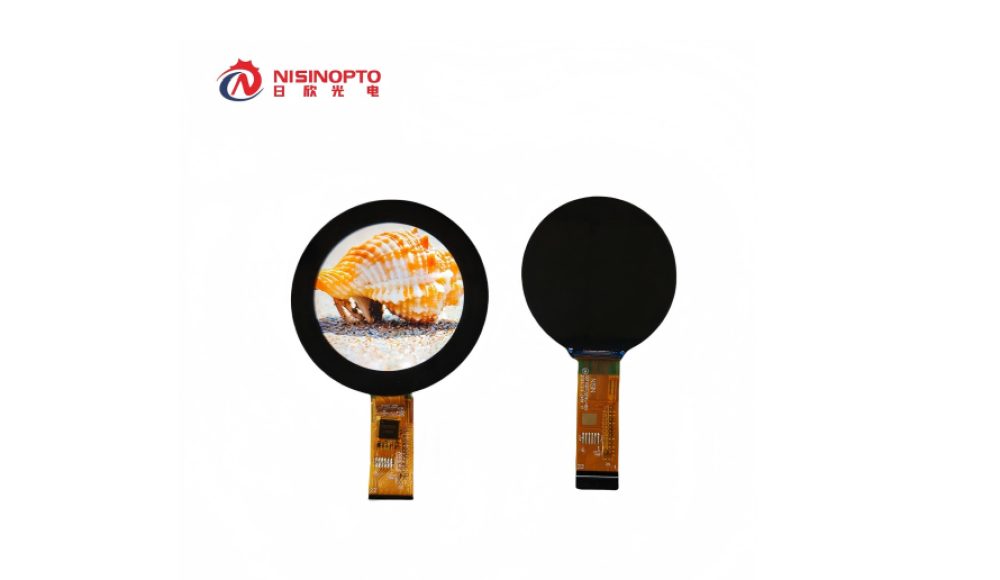
As electronic devices become smaller and more functional, displaying information clearly within limited space has become a common design challenge. Traditional rectangular screens are not always the best fit for products with rounded surfaces or compact control panels. A 1.6-inch circular LCD display offers another option, combining a distinctive screen shape with detailed visual presentation.
For manufacturers developing smart home appliances, automotive control systems, and other compact electronics, the display needs to do more than show basic text. Resolution, color performance, viewing angle, and interface compatibility all influence the final user experience.
NISIN’s 1.6-inch circular LCD display is designed for these requirements, featuring a 400 × 400 resolution, 16.7 million colors, and MIPI and QSPI interface options. These specifications give product designers more flexibility when developing compact devices with clear, visually appealing interfaces.
1. More Information in a Small Display Area
A small screen has limited space, so every pixel matters. When an interface includes icons, status indicators, text, and graphical elements, a low-resolution display can make details difficult to distinguish.
With a 400 × 400 resolution, the NISIN 1.6-inch circular LCD display provides a detailed image area for compact electronic products. Designers can arrange visual elements more effectively, whether the screen is used to display operating status, adjustment settings, or other device information.
The circular format also creates opportunities for different interface layouts. For example, a smart home controller may use circular indicators for temperature and lighting settings, while a car control interface may organize selected functions around a central visual element. Rather than simply shrinking a larger interface, designers can develop layouts that make better use of the available circular display area.

2. Color and Viewing Angle Matter to the User Experience
Resolution is only one part of display quality. Color reproduction and viewing angle also affect how users interpret information on a screen.
The NISIN 1.6-inch circular LCD display supports 16.7 million colors, allowing it to present a broad range of colors for icons, graphics, and interface elements. This is useful for products that rely on visual feedback, such as smart home control panels and consumer electronics.
Its full-view display design helps maintain consistent color and brightness when viewed from different directions, subject to the display’s specified viewing characteristics. This can be useful when a device is mounted on a wall, installed in a dashboard, or positioned where users may not always look at it directly.
With a brightness of 300 cd/m², the display is suited to general indoor lighting conditions. For applications exposed to direct sunlight or other demanding lighting environments, designers should evaluate brightness requirements against the actual installation conditions.
3. A Compact Design That Fits Different Products
Integrating a display into a small device involves more than choosing the right screen size. Module thickness, mounting space, and the surrounding enclosure all affect the design.
The NISIN 1.6-inch circular LCD display measures 53 × 53 × 3.53 mm, giving product developers a compact module to consider for space-constrained designs. Its circular viewing area can complement products where appearance and interface layout are both important.
Potential applications include:
- Smart home appliances: Displaying operating status, settings, and visual indicators.
- Smart home central control: Presenting lighting, temperature, and other connected-device controls.
- Automotive central control: Supporting compact interfaces for selected vehicle functions, subject to automotive requirements.
- Other embedded electronics: Providing graphical information where a small, circular screen fits the product design.
The display dot pitch is specified as 33.2 μm × 99.6 μm. Designers should review the complete technical documentation when evaluating pixel geometry, optical performance, and compatibility with the intended interface.
4. MIPI and QSPI Interfaces Make Integration More Flexible
Display performance alone does not determine whether a module is suitable for a project. It must also work with the host processor, display controller, and available hardware resources.
The NISIN 1.6-inch circular LCD display supports MIPI and QSPI interfaces, giving developers options when planning hardware integration.
MIPI is commonly used in embedded display applications where display data throughput and processor integration are important considerations. QSPI can be useful in designs where the system architecture supports a serial interface and the required display update performance can be met.
The appropriate interface depends on the host platform, available pins, display controller support, data requirements, and software implementation. Confirming these details early can help reduce development adjustments later. For OEMs and electronics manufacturers, interface compatibility is an important part of selecting a display that can be integrated efficiently into the final product.

5. What Should Manufacturers Consider When Choosing a Circular LCD Display?
Before selecting a 1.6-inch circular LCD display, manufacturers should look beyond screen dimensions and compare the specifications with their actual application requirements.
Resolution determines how much visual detail the screen can present. Brightness and viewing characteristics affect readability, while color support influences the appearance of graphics and interface elements. Physical dimensions and interface options are equally important for mechanical and electrical integration.
It is also worth considering the operating environment, expected display content, processor capabilities, and production requirements. A display intended for an indoor smart home controller may have different priorities from one designed for an automotive application.
NISIN’s 400 × 400 circular LCD display combines a compact 53 × 53 × 3.53 mm form factor with 300 cd/m² brightness, 16.7M color support, and MIPI and QSPI interfaces. These specifications provide a useful starting point for manufacturers evaluating display solutions for compact electronic devices.

Frequently Asked Questions
What are the advantages of a 1.6-inch circular LCD display?
A 1.6-inch circular LCD display combines a compact form factor with a rounded viewing area. It can suit products where screen shape, interface layout, and visual appearance need to work together.
What is the resolution of the NISIN 1.6-inch circular LCD display?
The display has a resolution of 400 × 400 pixels, supporting detailed graphics, text, and icons within a compact circular screen.
Which interfaces does the NISIN circular LCD display support?
It supports MIPI and QSPI interfaces. Developers should confirm compatibility with their host processor, controller, and software platform before integration.
Where can a 1.6-inch circular LCD display be used?
Potential applications include smart home appliances, smart home central control systems, automotive central control, and other embedded electronic products that require a compact graphical display.
Conclusion:
A well-designed display helps small devices communicate information without making the interface feel crowded. By combining a circular form factor with detailed resolution, broad color support, and flexible interface options, a 1.6-inch circular LCD display can give manufacturers more choices when developing compact electronic products.
The NISIN 1.6-inch circular LCD display features a 400 × 400 resolution, 300 cd/m² brightness, full-view display design, 16.7M color support, and MIPI and QSPI interfaces. For product developers working on smart home controls, automotive interfaces, and other embedded applications, these specifications are worth evaluating against the requirements of the intended device.