
Industrial equipment is becoming more intelligent, connected, and operator-focused. As a result, the display is no longer just a component for showing numbers or machine status. It has become an important interface between operators and industrial systems.
A custom touchscreen LCD module can help equipment manufacturers create a more intuitive, efficient, and application-specific human-machine interface (HMI). Compared with standard displays, customized solutions allow manufacturers to optimize the screen size, touch technology, interface structure, viewing angle, brightness, and mechanical design according to the actual operating environment.
For industrial device manufacturers, system integrators, and OEMs, this flexibility can directly affect usability, operational efficiency, and product differentiation. As a professional touchscreen LCD module manufacturer, NISIN provides customized display solutions designed around different industrial application requirements.

Why Is the Display Important in Industrial Devices?
Industrial operators often work with complex equipment that requires real-time monitoring and frequent interaction. Traditional buttons, indicators, and basic displays can make these operations more complicated, especially when a machine has multiple functions.
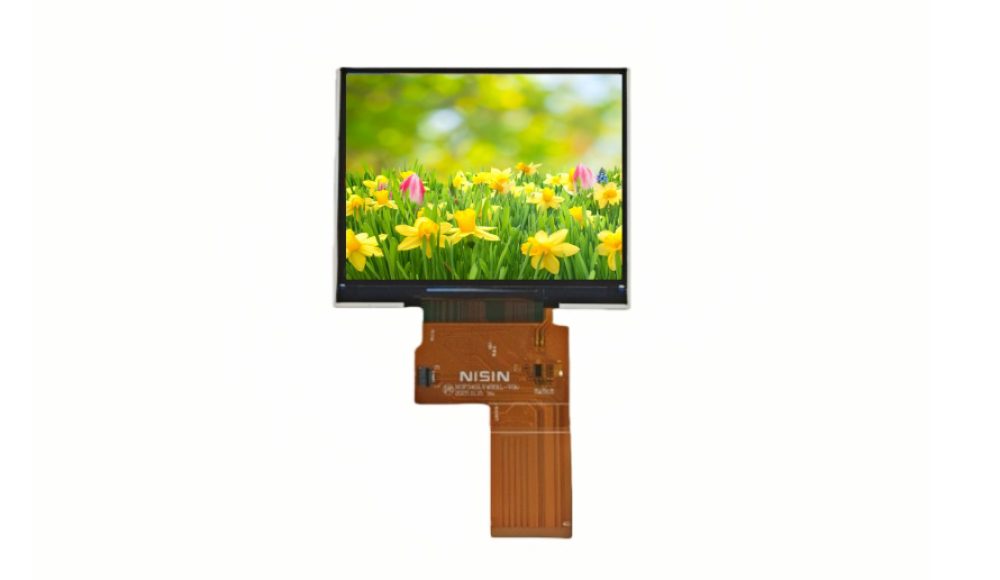
A modern touchscreen LCD module combines visual information and user input in one interface. Operators can view operating parameters, receive alarms, adjust settings, and control equipment from the same screen. For manufacturers, this means the display can become part of the overall product design rather than simply an electronic component. A well-designed industrial touchscreen display should therefore provide more than good image quality. It needs to balance usability, durability, readability, and compatibility with the equipment.
1. Custom Touchscreen LCD Modules Create More Intuitive Interfaces
One of the biggest advantages of a custom touchscreen LCD module is the ability to design the user interface around the actual workflow.
Instead of forcing operators to navigate through a fixed button layout, manufacturers can organize functions according to how the machine is used. Frequently accessed controls can be placed on the main screen, while advanced settings can be moved into secondary menus.
For example, an industrial control panel may display:
- Machine operating status
- Temperature and pressure readings
- Production parameters
- Alarm notifications
- Maintenance reminders
- Equipment diagnostics
- Manual and automatic operating modes
This approach reduces unnecessary steps and helps operators understand machine status more quickly.
For B2B equipment manufacturers, a more intuitive interface can also reduce operator training requirements. That can be particularly valuable when equipment is deployed across different factories or regions.
2. Better Visibility in Different Industrial Environments
Industrial devices are not always operated in controlled indoor environments. Some equipment may be installed in factories with strong lighting, while others may operate in warehouses, workshops, outdoor locations, or production lines.
A standard display may not provide sufficient visibility under these conditions.
A customized industrial LCD display can be configured according to the application’s visual requirements, including screen size, brightness, contrast, viewing angle, and optical performance.
For example, high-brightness solutions can improve readability in environments with strong ambient light. Wide viewing angles can make information easier to read when operators are standing beside the equipment rather than directly in front of it. This is particularly important for control panels that need to be viewed from different positions during daily operations.
3. Touch Technology Makes Equipment Operation More Flexible
Different industrial applications require different touch technologies.
Depending on the operating environment, manufacturers may consider technologies such as:
- Projected capacitive touch
- Resistive touch
- Glove-compatible touch
- Multi-touch operation
- Customized touch sensitivity
The right solution depends on how operators interact with the equipment. For example, capacitive touchscreens can provide smooth and responsive interaction for modern control interfaces. Resistive touch technology may be more suitable for certain applications where operators frequently wear gloves or use a stylus. Therefore, choosing a custom touchscreen display is not simply about selecting a screen size. Touch performance should also be matched to the working conditions and user behavior.

4. Customized Dimensions Improve Equipment Integration
Industrial equipment often has strict space limitations. A standard display may have suitable specifications but still fail to fit the mechanical structure of the device.
Custom LCD modules provide manufacturers with greater flexibility in terms of:
- Display dimensions
- Aspect ratio
- Active display area
- Mounting structure
- Connector position
- Touch panel configuration
- Bezel design
- Housing integration
This allows the display to be designed around the equipment instead of forcing the equipment enclosure to accommodate an existing screen.
For OEMs, this can simplify product development and create a cleaner final appearance.
More importantly, customized dimensions can help manufacturers maintain consistency across different equipment models while using related display platforms.
5. Better User Feedback Can Improve Operating Efficiency
A touchscreen is not only an input device. It is also a feedback mechanism.
When an operator changes a parameter, starts a process, or responds to an alarm, the system should provide clear visual feedback. A well-designed touchscreen interface can use icons, status indicators, color changes, progress bars, and warning messages to communicate machine conditions.
This can help operators identify problems without checking multiple physical indicators.
For example, instead of relying on a small warning light, an industrial touchscreen can display the alarm type, affected component, current parameter, and recommended action on one screen.
This makes troubleshooting more straightforward and can help reduce unnecessary downtime.

6. Customization Supports Different Industrial Applications
There is no single display specification that works for every industrial device.
A touchscreen LCD module used in a CNC machine may have different requirements from one used in medical equipment, laboratory instruments, automation systems, or industrial control terminals.
Different applications may require different combinations of:
| Application | Typical Display Considerations |
|---|---|
| Industrial automation | Fast response, clear status information, reliable touch |
| CNC equipment | Precise controls, readable parameters, durable interface |
| Medical equipment | High image clarity, easy operation, cleanable surface |
| Laboratory instruments | Compact size, accurate data presentation |
| Smart control panels | Multi-touch, modern UI, flexible integration |
| Outdoor equipment | High brightness, wide temperature capability |
| Industrial IoT devices | Real-time data display and intuitive navigation |
This is where customization becomes particularly valuable. Manufacturers can select specifications based on actual application requirements instead of purchasing a generic display and adapting the product around it.
7. Durability Is Essential for Industrial Touchscreen Applications
User experience in industrial environments is closely related to product reliability.
A touchscreen may be used hundreds or thousands of times during normal operation. It may also be exposed to vibration, dust, temperature changes, humidity, or frequent cleaning.
Therefore, an industrial touchscreen module should be evaluated not only for appearance and responsiveness but also for its suitability for the working environment.
Depending on the application, manufacturers may consider:
- Protective glass
- Surface treatments
- Anti-glare performance
- Scratch resistance
- Dust and moisture protection
- Wide operating temperature ranges
- Mechanical durability
- Long-term component availability
These factors can help maintain consistent touch and display performance throughout the equipment’s service life.

8. Custom Displays Can Strengthen Product Differentiation
For B2B manufacturers, the display can also contribute to product differentiation.
Two machines may have similar mechanical functions, but the one with a cleaner and easier-to-use interface can provide a better overall user experience.
A customized display can support:
- Brand-specific interface design
- Customized screen proportions
- Dedicated control layouts
- Integrated touch and display solutions
- Different enclosure designs
- Application-specific UI requirements
This gives OEMs more control over the final appearance and operation of their equipment.
Instead of using the same off-the-shelf display as competing products, manufacturers can develop an HMI that better reflects their own product architecture and brand positioning.
What Should Manufacturers Consider When Choosing a Custom Touchscreen LCD Module?
Customization should begin with the application rather than the display itself.
Before selecting a supplier, equipment manufacturers should define several key requirements.
Display Size and Resolution
The screen should provide enough viewing area for the required information without occupying unnecessary installation space. Resolution should also match the complexity of the interface and the type of information being displayed.
Touch Technology
Consider whether operators will use bare fingers, gloves, tools, or a stylus. The operating environment should determine the appropriate touch solution.
Operating Environment
Temperature, humidity, dust, vibration, ambient lighting, and cleaning requirements can all influence the display specification.
Mechanical Integration
Manufacturers should confirm dimensions, mounting requirements, connector locations, cable routing, and installation structure at an early stage.
Long-Term Supply
Industrial equipment often has a much longer product lifecycle than consumer electronics. Therefore, component consistency and long-term supply capability are important factors when selecting a touchscreen LCD supplier.
How NISIN Supports Custom Touchscreen LCD Applications
For industrial equipment manufacturers, customization is most valuable when the display supplier can understand the application rather than simply provide a standard screen.
NISIN focuses on custom LCD modules, touchscreen solutions, and display integration for different product requirements. By considering display specifications, touch functionality, mechanical structure, and application conditions together, manufacturers can develop a display solution that fits their equipment more effectively.
This approach is particularly useful for OEMs and system integrators that require a display with specific dimensions, touch performance, interface requirements, or environmental characteristics.
Conclusion:
A custom touchscreen LCD module can significantly improve the user experience of industrial devices by making equipment easier to operate, easier to monitor, and better suited to real-world working conditions.
The benefits go beyond touchscreen convenience. Proper customization can improve visibility, simplify workflows, support equipment integration, enhance operator feedback, and strengthen product differentiation.
For industrial equipment manufacturers, the key is to select a display solution based on the complete application rather than focusing on screen size or resolution alone. With the right combination of LCD performance, touch technology, mechanical design, and environmental reliability, the display can become a valuable part of the overall industrial product.
NISIN works with manufacturers and OEMs to develop customized touchscreen LCD solutions that align with specific equipment and application requirements.